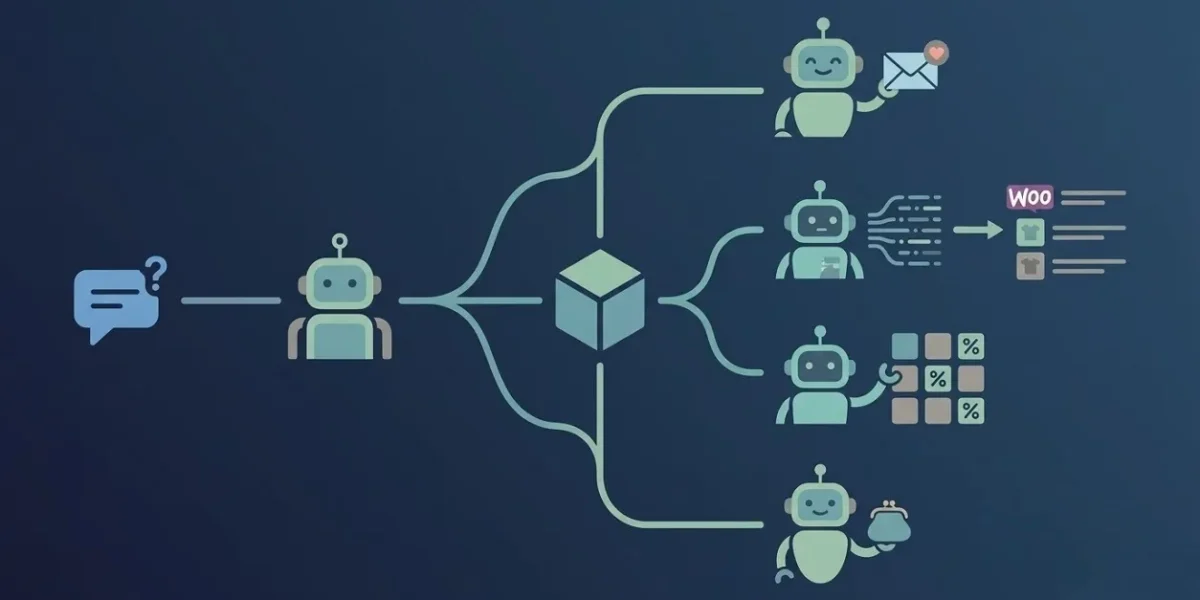
Summary — AI‑Powered Sales Funnels for WooCommerce in 2026 (Using Only Free Tools) If you run a WooCommerce store in 2026 and you’re still sending people straight from your product grid to the default checkout, you’re leaving…
AI‑Powered Sales Funnels for WooCommerce in 2026 (Using Only Free Tools)
If you run a WooCommerce store in 2026 and you’re still sending people straight from your product grid to the default checkout, you’re leaving a lot of money on the table. Across ecommerce, around 70–72% of shopping carts are abandoned, and WooCommerce stores typically fall into the 70–75% range—especially in high-intent niches like fashion, beauty, and general retail.
At the same time, the average WooCommerce order value sits around 122 dollars, which means every abandoned cart isn’t just one lost sale—it’s potentially hundreds of dollars walking away. When you combine that with rising ad costs and more competition, “just getting more traffic” is no longer a smart growth strategy.
That’s where AI-powered sales funnels come in. A good funnel doesn’t just change your layout; it changes how you guide people from the first click to a loyal repeat purchase—using personalization, smart offers, and timing. And the good news: you can do a lot of this in WooCommerce with 100% free tools plus AI models like Claude or ChatGPT to handle the heavy thinking.
In this article, we’ll go deep into:
- What an AI-powered WooCommerce funnel actually is (beyond buzzwords)
- The data behind abandonment, AOV, and why funnels matter now
- A practical funnel architecture you can build with free plugins
- Where AI genuinely adds value (and where it’s just hype)
- Benchmarks, common mistakes, and how to iterate over time
What Is an AI-Powered Sales Funnel in WooCommerce?
A sales funnel is simply the structured path you design to move a visitor from “just browsing” to “loyal customer,” one small decision at a time. Classic ecommerce funnel models break this into stages like:
- Awareness → discovering your brand
- Interest → checking products and content
- Consideration → comparing options and adding to cart
- Conversion → completing checkout
- Retention → repeat purchase and loyalty
On a standard WooCommerce setup, this whole experience is often left to chance: users land on a generic shop page, click around, maybe add something to cart, and then hit a multi-step checkout that was never designed with mobile behavior or psychology in mind.
An AI-powered WooCommerce funnel keeps the same stages but adds two big upgrades:
- Better structure
You use funnel builders, optimized checkouts, upsells, and email flows to design a deliberate path:
Landing page → focused offer → streamlined checkout → upsell → tailored follow‑up. - Smarter decisions using AI
Instead of guessing copy, offers, and targeting, you use AI to:- Generate and test multiple versions of headlines, product angles, and CTAs
- Personalize recommendations based on browsing and purchase behavior
- Automate email content and timing based on how each user interacts with your store
In practice, that can mean something as simple as using ChatGPT to write high-converting email sequences—or as advanced as AI-driven product recommendation engines plugged into WooCommerce.
Why Funnels Matter More Than Ever in 2026
The stats haven’t been kind to lazy funnels:
- Overall cart abandonment ~70–72%, stable for almost 20 years because the bottleneck is buyer psychology, not technology.
- WooCommerce abandonment specifically ranges 70–75%, with some mobile-heavy setups spiking over 85%.
- Fashion and retail segments regularly see abandonment above 80%, making optimization critical for profit.
At the same time, WooCommerce stores enjoy relatively high order values:
- Average WooCommerce AOV is about 122 dollars, higher than many marketplace sellers and above Shopify’s typical AOV.
- One‑click upsells and cross‑sells can increase AOV by 15–25%, according to multiple WooCommerce optimization guides and plugin benchmarks.
This creates a simple equation for store owners:
- You don’t need more random traffic; you need to convert more of what you already have, and
- You want each converted customer to spend a bit more per order.
Structured funnels and AI‑driven personalization directly attack both problems: they reduce abandonment by removing friction and indecision, and they grow AOV with relevant, timely offers.
The Core Building Blocks (All Free)
You don’t need a huge SaaS stack to get started. A solid AI‑assisted funnel for WooCommerce can be built using:
- CartFlows (free) – visual funnel builder and checkout optimizer
- Lets you replace the default WooCommerce checkout with one‑page, conversion‑optimized flows.
- Provides templates for landing pages, checkouts, upsells, and thank‑you pages.
- MailPoet (free tier) – email marketing and simple automations
- Abandoned Cart Lite for WooCommerce – cart recovery
- Tracks abandoned carts and sends follow‑up emails with dynamic cart links.
- Simple but reliable, and a good match if you don’t want a full marketing suite yet.
- AI tools (Claude, ChatGPT, Perplexity, etc.)
- Used to generate product descriptions, landing copy, email flows, and even CSS or JS snippets.
- Many store owners already use them informally; formalizing this into your funnel process is where the real leverage comes from.
Alongside these, you can optionally test free or freemium AI‑powered personalization plugins for WooCommerce that add behavior‑based product recommendations and dynamic content blocks. Even if you stay entirely on free tiers, they can meaningfully impact conversion and AOV.
Funnel Stages, Reimagined for WooCommerce
Let’s map a realistic funnel for a WooCommerce store using this stack. Instead of focusing on button‑by‑button instructions, we’ll focus on why each part exists and how AI helps.
1. Top of Funnel: Focused Landing Page Instead of Generic Shop
Most stores send paid or social traffic to a generic shop or category grid. That’s essentially asking a new visitor to do the hard work of choosing what they want.
A better play in 2026 is to send traffic to a single, tightly focused offer—for example:
- A “starter bundle” for new customers
- A seasonal collection (e.g., summer outfits, holiday gifts)
- A specific use case (e.g., “work‑from‑home comfort kit”)
Using CartFlows, you can create a dedicated landing step for this offer and design it with Elementor or the block editor. AI helps here by:
- Writing targeted headlines and hero copy for specific audiences (e.g., “new pet parents,” “remote workers,” “students on a budget”).
- Generating multiple angles you can A/B test: emotional, price‑driven, social‑proof heavy, etc.
Research on ecommerce funnels consistently shows that focusing on a clear, specific offer at the top of the funnel improves click‑through and lowers bounce rate compared to dropping people on a busy shop page.
2. Middle of Funnel: Streamlined One‑Page Checkout
The biggest leak in most funnels is not “checkout abandonment” but cart‑to‑checkout drop‑off—people who add items but never even start the checkout process. Lengthy, multi‑step forms on mobile make this even worse.
Replacing the default WooCommerce checkout with a one‑page, conversion‑optimized layout is one of the fastest wins you can get:
- Fewer fields visible at once
- Clear order summary and pricing
- Trust elements (badges, guarantees, reviews) directly near the payment button
Studies and case guides from WooCommerce optimization blogs suggest that this alone can improve checkout completion by 20–35% in many stores, especially on mobile.
AI can support this stage by:
- Generating microcopy and field labels that feel natural and friendly, reducing friction (“Email for order updates” vs “Billing email”).
- Producing CSS snippets to adjust colors, fonts, and spacing without needing a frontend specialist.
Even if you don’t change your entire theme, small improvements—like a more visible call‑to‑action, simplified form labels, and better error messages—can significantly reduce the cognitive load on users.
3. Bottom of Funnel: One‑Click Upsells and Bundles
Once a customer has committed to a purchase, their willingness to add a small extra is at its highest. WooCommerce AOV benchmarks show that thoughtful upsells and cross‑sells can increase average order value by 15–25%, sometimes more in categories where bundles make intuitive sense.
With CartFlows (even on the free tier), you can add a post‑checkout step that offers:
- A higher‑value version of the product
- A “complete the set” bundle
- A consumable or add‑on that makes the main purchase more useful
AI’s role here is primarily copy and offer design:
- You can ask an AI model to suggest logical upsells based on your catalog (e.g., what typically pairs with running shoes, pet toys, skincare products).
- It can generate benefit‑driven upsell copy that explains why the add‑on is a smart decision, not just a random extra.
Research on upselling in WooCommerce and other platforms consistently shows that the most effective upsells are tightly related to the original product, limited in number, and clearly framed as a valuable enhancement rather than a pushy extra.
4. Post‑Purchase: Retention and Recovery
The final stage of your funnel is where a lot of stores go silent: after the order confirmation email, many WooCommerce setups send nothing at all.
Yet, multiple studies show that:
- Sending even a single abandoned‑cart email can recover 10–15% of otherwise lost sales.
- Well‑designed post‑purchase email flows can dramatically increase repeat purchase rate and lifetime value, especially in consumable or seasonal categories.
Using Abandoned Cart Lite and MailPoet together, you can:
- Capture carts where the user entered an email but didn’t complete payment
- Send a short sequence of reminder emails with product images and direct resume links
- Follow up after a successful order with:
- A thank‑you email
- A review request
- A time‑limited discount for a related product
AI shines here by:
- Writing multiple versions of reminder emails with different tones (friendly, urgent, humorous) you can test against each other.
- Generating subject lines optimized for curiosity and clarity, which are known to boost open rates.
As you collect data, you can gradually move from generic templates to behavior‑based personalization, where content and timing change based on what a user actually bought and how often they engage with your emails.
Where AI Actually Helps (Beyond Buzzwords)
“AI for ecommerce” is a broad phrase. To keep it practical, you can think about AI help in four buckets:
1. Faster, Better Copywriting
Writing high‑quality, conversion‑focused copy is time‑consuming, and many store owners aren’t natural writers. AI models can:
- Draft landing page sections, product descriptions, and upsell pitches tailored to your niche and audience.
- Rewrite your existing copy in different styles (more casual, more urgent, more luxury‑oriented) for testing.
- Localize or adapt content for different countries and languages, which is increasingly important as cross‑border ecommerce grows.
You still need to review and edit for brand voice and accuracy, but the speed boost is enormous.
2. Personalization and Recommendations
More advanced AI setups can analyze:
- Browsing history
- Search behavior on your site
- Purchase history
…and then display dynamic product recommendations such as “Customers who viewed this also liked…” or “Complete your look”.
Case studies on AI‑driven personalization in WooCommerce environments show:
- Noticeable increases in click‑through rates on recommended items
- Higher AOV, since users discover complementary products more easily
- Reduced abandonment when relevant alternatives are suggested instead of dead ends (e.g., out‑of‑stock items leading to recommendations rather than empty pages)
Even without a fully integrated recommendation engine, you can start by:
- Using AI to identify logical product pairings from your inventory
- Manually configuring “frequently bought together” or related product blocks based on those insights
3. Smarter Testing and Optimization
Traditional A/B testing is powerful but slow if you’re doing everything by hand. AI can accelerate the cycle by:
- Quickly suggesting variations of headlines, CTAs, layouts, and email subject lines based on best practices in your niche.
- Helping you interpret data: summarizing which version worked better and hypothesizing why, based on your analytics.
You still rely on your tools (CartFlows analytics, GA4, MailPoet reports) for the actual numbers, but AI can make it easier to draw conclusions and generate the next test idea.
4. Operational Automation
Finally, there’s workflow automation:
- Creating standard operating procedures (SOPs) and checklists for launching new funnels or campaigns
- Writing customer support macros for common questions about shipping, returns, and product care
- Drafting documentation, FAQs, and knowledge base articles so your support burden goes down as you scale
This doesn’t directly change your funnel structure, but it frees up your time to focus on the strategic tweaks that matter most.
Benchmarks and What “Good” Looks Like
When you start optimizing your funnel, it’s useful to have rough targets in mind. Exact numbers will vary by niche, but 2025–2026 benchmarks give you a ballpark:
- Landing page opt‑in rate:
- 10–15% = decent
- 15–25% = strong
- 25%+ = excellent (usually highly targeted audiences or very strong offers)
- Cart to checkout start:
- If less than half of cart adders even start checkout, there’s friction at the cart stage (unexpected fees, confusing buttons).
- Checkout completion rate:
- 40–50% = common for default setups
- 60–70%+ = achievable with streamlined one‑page checkouts and trust elements
- Abandoned cart recovery:
- 10–15% recovered with a simple one‑ or two‑email sequence
- Up to 20–25% with better timing, personalization, and incentives
- Average order value (AOV):
- WooCommerce overall: around 122 dollars
- A 15–25% increase through upsells and bundles is realistic when you implement relevant offers.
With these numbers, even modest improvements at each stage stack up. For example, if you:
- Boost landing opt‑ins from 10% to 18%
- Raise checkout completion from 45% to 60%
- Add a 15% upsell acceptance rate
…you can end up with roughly double the revenue from the same traffic, once both conversion rate and AOV are factored in.
Common Mistakes to Avoid
As you build or refine your AI‑powered funnel, watch out for these traps:
- Sending all traffic to a single generic page
Different campaigns and audiences often need different landing messages. Reusing one “shop” link for everything wastes targeting. - Letting AI write everything unedited
Models can hallucinate product details, over‑promise, or drift in tone. You still need human judgment to keep copy on‑brand and honest. - Overloading users with choices
Giving three or four upsells or too many design variations can paralyze people. Research supports one main upsell or bundle at a time. - Ignoring mobile
Cart abandonment on mobile can reach 75–85%, and many themes still prioritize desktop aesthetics. Always test your funnel on smaller screens. - Not measuring each stage separately
If you only look at overall sales, you won’t know if the problem is awareness, cart engagement, checkout friction, or post‑purchase retention. - Chasing new AI tools instead of mastering a few
In 2026, new AI plugins and platforms pop up constantly, but most stores will get 80% of the value from consistent use of just a handful of tools plus a good language model.
Putting It All Together
If you’re running a WooCommerce store in 2026, building an AI‑assisted sales funnel with free tools is no longer a “nice experiment”—it’s rapidly becoming the baseline for staying competitive.
By combining:
- A structured funnel (landing → checkout → upsell → thank‑you → email)
- Free tools like CartFlows, MailPoet, and Abandoned Cart Lite
- And AI for copy, personalization, and continuous testing
…you can systematically reduce abandonment, increase AOV, and create a shopping experience that feels more like a guided conversation than a random catalog browse.
From here, your next step is simple: map your current funnel on paper, identify the largest leak (often the checkout or post‑purchase stage), and use the ideas above to fix that one area first. Once you see the numbers move, you can expand AI and funnel tactics to the rest of your store.